Wednesday, 30 March 2016

Sold out

Today I asked one of my team to make a call to the Land Registry to find out how much longer it will be before our application to register the transfer of part of a plot of land will be processed.

The transaction was completed at the end of last year and the application for registration lodged in January.

The response was disturbing – on two levels.

First, we were informed that there is currently a backlog of six months – yes, half a year. Imagine what goes on (or can’t) in the property market over that period of time, even in dull times.

This was followed by the illustrative report that the call-handler is currently dealing with applications lodged in July 2015.

So, actually that’s 8 months, not 6, and you’re so disillusioned perhaps that you’ve lost track of time…

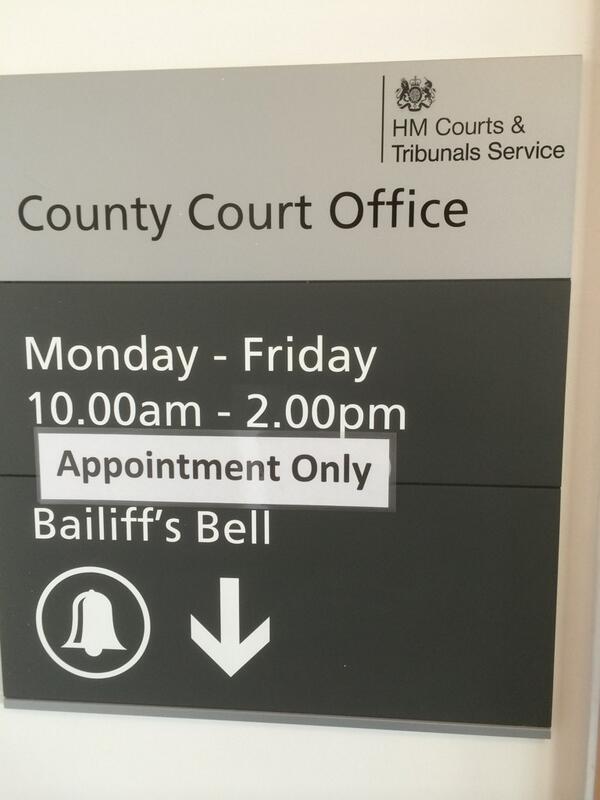
On any analysis this is lamentable. I thought our local courts were a scandal, taking as they are 5-6 weeks to draw an order (even when we have drafted and e-filed it). They are – but this is just surreal.

One couldn’t contemplate for one moment of course that this is the product of some filthy trick by a government committed to selling off the Land Registry that has until recently been so efficient and would net them a chunk of cash to aid the hopeless task of balancing the books..

One way or the other, it’s an ugly state of affairs.


Friday, 5 February 2016

The bitterest pill

I see that another debate has kicked off about how to make savings in the NHS, efficiency expert Lord Carter concluding that up to £5 billion could be found. I don’t know the merits of that and the true potential.  In principle it’s a perfectly valid discussion to have – as long as one keeps an open mind to the possibility that it’s further investment, not cuts, that we need.

It won’t be long before the old cracked record comes out of its sleeve and we are being told that the biggest drain on the NHS is the army of “ambulance chasers” and “fat cats”. That will be lawyers acting for victims of clinical negligence.

In this country we have, and have had for hundreds of years, laws that require (put in very simple terms) people who act carelessly to compensate other people who are injured and suffer loss as a result. We all fall into error during the course of our daily life, often without any dire consequence.  

Sometimes, though, it happens whilst we are driving a vehicle, operating machinery or performing some other skilled task.  Acts of Parliament and other subordinate legislation define and refine the standards that must be met as well as prescribing in many instances insurance to meet awards of compensation – and dare I say it, victims’ costs.

All this doesn’t exist just because somebody thinks it a fine idea for the sake of it.  It is not there to create an industry – to feed “fat cat” lawyers. It exists, as should all our laws, for moral and humane reasons.

One is that we are (or were) a caring society that helps those who have been the unfortunate victims of somebody else’s error, rather than simply shaking our heads, pursing our lips and leaving them to get on with it.  Just as - if not more - important is the deterrent effect, to put it in blunt terms. 

Positive aspects of every misfortune are that it is a reminder of the risk and potential consequences – a prompt to be more careful next time.  We don’t rely on the wrong-doer’s conscience alone, though in many cases that will be the most powerful control of future behaviour.  Awards of compensation not only help the victim but also hit institutional culprits where it hurts, where it will make them think again. 

Even if they have insurance, there will be an effect because those underwriting the cost will by various means require better standards of behaviour in future as well as upping the price of what they provide. Of course insurers, particularly those in the road traffic market, don’t see better behaviour as the only way forward.  They will fight by any means to avoid paying compensation – which achieves neither of our society’s aims (above).

Often, and quite rightly, they lose and have to pay more.  Then they whinge and want the law changed.  They are about to have some startling success with their friends in the current government - but that is another macabre tale…

So, back on the ward, how do we save money?  Well, I have two suggestions.

Before I tell you, here is a clue to what they might be.  Ask yourself why in any particular case, the NHS should have to pay compensation to somebody who claims they have been the victim of clinical negligence and costs to their lawyers. Is it as simple as somebody coming out of the hospital, accusing the medical professionals of carelessness and demanding huge sums of money? 

If you are struggling with that last question, let me help you also with the information that the laws are applied by courts staffed by judges who are generally quite clever and more to the point independent and objective people.  Contrary to what liability insurers might suggest to you, they are able and willing to sift out weak and dishonest claims - if they get that far.

Guess what happens to the people running those cases?  One thing above all – they don’t get any money, nor do their lawyers – assuming, as is almost always the case, that they are acting on conditional fee terms. 

Turn that around and you will understand, if you didn’t already, that money only spills out of the public purse when a judge decides that it should by law or those defending the claim see that as the likely end result and sensibly get to work on some damage limitation.

So the first solution is prevention – try harder not to cock up in the first place.

I am no more certain of the recipe for that than all the clever people who have allegedly worked on the problem before but I imagine it looks something like better training, improved hours, better pay in some cases, improved performance management etc.

Oh dear!  That’s going to cost money isn’t it?  Light bulb moment…that investment may ultimately save money that we are currently having to pay for messing up. Oh, and there is another minor benefit of that scenario – fewer people die or have their lives ruined along the way.

Looks good to me.  It won’t be foolproof, of course, because nothing and nobody is perfect. But even after the event, we can make things better than they are at the moment.  How? Easy…

What you do is inspire, failing that order, those handling claims on behalf the NHS to act sensibly, to promptly admit fault where they should and agree reasonable sums of compensation.  The most disarming response in most situations where a person is angry at another for what has happened to them is for the wrong-doer to stick their hands up and say “sorry”. 

That is not all of it, because people still need to be compensated according to the moral standards that we maintain in our society – but it is a damn good start!

The National Health Service Litigation Authority (NHSLA) is famed for not doing this.  Just recently we have seen a reported case where the NHS has been penalised for refusing to sit down and talk, to participate in mediation.[1]

That's a damning indictment of itself but here is the sickly icing on the rotten cake – the judge (quite correctly) hit them with an enhanced costs order so they have had to pay even more to the innocent victim.

This is just dumb.

Meanwhile, the government is after a placebo, not a cure.  In clinical negligence claims, the current thinking is to fix and cap costs of lawyers acting for the victims.

“Surely that is a good thing?” you may be asking yourselves.  That is going to cut down the costs paid in successful cases (i.e. where the claimant deserves it) because there must be (yes there are) some unscrupulous people including lawyers intent on milking the situation.

But we already have a system of costs assessment – always have had - which means that, just like the claim itself, if the defendants think they are being taken for a ride then they force the argument before a judge who will limit the payment of costs to what is reasonable and if appropriate award the defendants their costs of bringing the argument to the court.

It has already become much more restrictive than it used to be.  For eleven years, we had a very clear statement of principle handed down by the Court of Appeal in 2002[2] about the need for costs to be proportionate but carving out an exception where obstructive behaviour by defendants generated what would otherwise have been unnecessary additional costs.  In other words, if defendants mucked around and kicked up a fuss rather than focusing on resolution of the claim, they could expect to be ordered to pay for all the extra time and money wasted as a result.

Even that has gone now.  New rules on proportionality basically say that the court can scrutinise all the elements of the claim for costs, decide on a sum that is reasonable and then slash it in half or more simply because it is out of proportion to the value of the claim.

So why bring the claim if it is going to cost, say, twice or three times the value to pursue it? Assume that it is a perfectly good claim but those costs are generated because the defendants simply won’t face reality and get it resolved at an early stage.

You may say that the sensible thing for the claimant to do is to give up, perhaps even before they have started.  That is of course exactly what the insurance industry and major institutional defendants like the NHS want to happen.

We are set to go a stage further now with a scheme of fixed costs.  “Fixed” doesn’t necessarily mean “unreasonably low”, of course but I will wager that is where we get to.
 
Many lawyers will remember the initial levels of costs within the portals for dealing with low value road traffic claims, negotiated by agreement between the two sides of the industry and felt to be fair to both sides.

Subsequently the insurance industry pumped up the level of referral fees that they were trousering for handing some lawyers cases to run against them, then said that most of the fixed costs went on referral fees, rushed round for an exclusive clandestine huddle with Mr Cameron and chums in Downing Street and had the figures slashed by more than half.

Such is the way, generally, that the law is now being manipulated in this country.  Whether it is to the financial benefit of, initially, insurers or the government the response to the cost of misfortune of innocent victims and mismanagement of claims is to try and deny them justice.

Such is the culture within the NHSLA at present.  We don’t care if we ruined your life and/or the lives of your family and friends and we don’t much care if it happens again.  We are not paying you.

If the only way to ensure that is to kneecap the lawyers who will otherwise force us to pay for our mistakes, then that is what the government will do.
 
Silence the critics, so we don’t have to answer to them.


[1] Reid v Buckinghamshire Healthcare NHS Trust - 14 December 2015
[2] Lownds v The Home Office

Tuesday, 12 January 2016

Parabis lost

Details have now been published of the wreckage following collapse of the Parabis empire last autumn.

The administrators appointed in November filed their report during the interval between Christmas and New Year.  All 142 pages are available to download from Companies House or you can opt for the succinct summary from John Hyde in the Law Society Gazette of 6 January 2016.

With more than 2,500 unsecured creditors set to lose in aggregate around £46 million this is notable as the highest profile failure so far of one of the relatively new alternative business structures within the legal industry. The ABS was the legal regulatory vehicle enabled by the Courts and Legal Services Act 2007 after the report of former deputy governor of the Bank of England, Sir David Clementi, had concluded that the legal services market would benefit from permitting non-lawyers to participate in the ownership of law firms.

One key thread of his brief was to find a framework that would “best promote competition, innovation and the public and consumer interest in an efficient, effective and independent legal sector”.

Hold that thought..

In the best tradition, these new reforms would not actually be implemented for another five years.  It was Spring 2012 before the Solicitors Regulation Authority finally unveiled the identity of the first three successful applicants for an ABS licence.  One of those was our old multi-talented chum, the Co-op.

Parabis was one of the first such structures to obtain private equity investment and the Duke Street equity house is listed as having £43 million or so still invested at the time of the administration. At the end of the day, they and other secured creditors will share a shortfall of around £41 million.

The list of unsecured creditors within the administrator’s report rivals the closing credits of Return of The King.  It’s not just intergroup debts, large rate bills outstanding to city councils and unpaid medical reporting agencies that make up the big numbers here. I can’t say I’ll weep for many of those responsible for the likes of The abominable Dr Botox or Fun boy three

Herds of m’learned friends are left whistling, some of them for hefty five figure sums.  The seasonable celebrations in the clerks’ rooms of a handful of London chambers must have been particularly muted.

Anyone remember old style law firms crashing and burning on this scale?

Well, so what?  I’m not in that list and hopefully you’re not either.  What does it matter?

It matters because of the damage done to the rest of the legal profession (yes, profession), the perception of the industry and the fabric of the law itself. 

People motivated by profit alone pump-up these leviathans with the aim of winning the market and part of that strategy is to take business away from the established players – even better, put them out of the game.  The cost of that – “efficiencies” as insurers love to call it – are part of the opening war of attrition and the consequent damage to the rest of the infrastructure.

The punters look on with no respect for these cheap turns, interested only in paying as little as possible (they think), if they must pay anything, and shifting responsibility for a shoddy job (which they won’t recognize, anyway) onto somebody – anybody – else.

And when they crash there are plenty of cheers for what they think is the pain inflicted on ‘fat cat’ lawyers – ‘ambulances chasers’ that they were happy to get into bed with in the heat of the moment.  

Well they’re right…and they’re wrong. “Tarred with the same brush” may be an over-worked phrase but it’s hard to find something more apt.

The point is that every time these fast-buck merchants hit the headlines with something like this they damage the perception of those who actually care about the law and how it serves the individual. People who will ultimately put reputation and pride in what they do ahead of profit.

Many of those people are disappearing from the profession. I don’t say it was difficult to foresee but I wrote of this long ago in No more heroes.

Whilst the people who know slip quietly away to escape the frustration and often loneliness of practising in an increasingly chaotic world shaped only by the venality of insurers, the law withers and dies from misuse. It’s going to be that rusty old machinery in the corner of the shed that I described in Road to Ruin.

I see in the reports the observations that Parabis entered into joint ventures with some major insurance companies but “enjoyed little leverage”. No shit?

“Having moved into the insurance market, the group was then hit by two large insurers moving significant volumes of work elsewhere, leading to the departure of key fee-earners and reduced funds to cover the costs of maintaining the infrastructure of the business.”

As one commentator on John Hyde’s report observed, if you’re going to sup with the Devil then you need a long spoon. I’d rather not even sit at the table.


Friday, 18 December 2015

Justice delayed..

It’s mad Friday and there is plenty to do, particularly with all that additional networking to fit in on top of keeping the production lines rolling.

The ever increasing “efficiencies” at the many court offices we deal with are a big help too...

The latest gem to pass across my desk this morning was the letter from the Salford Centre of Excellence which encloses one of those ugly forms from Registry Trust Limited warning that until we supply the missing information about one of the defendants we shan’t be able to enforce the judgment that we have apparently managed to enter in default on behalf of our client.

It seems that Registry Trust has not received (from the court office) the complete address of the second of two husband and wife defendants so we have had to wait whilst this goes backwards and forwards and is then dumped on us. Our reply today will enclose a copy of the claim form that we filed at the time of issue with the “missing” house number and street name highlighted in two places on the second defendant’s copy. We wait now until after Christmas before we can take any further steps to enforce judgment that we requested a fortnight ago. Great.

That isn’t even a remarkable case.  But there is more.

I am reading the report of yet another call from one of the costs muppets - as my old friend (now retired) Martin Cockx used to call them - demanding a response to a daft opening offer on a bill of costs in relation to a claim that settled without proceedings but where we had to issue to obtain payment of the agreed damages. We've said repeatedly that we need to know what's happening at the court...

We kicked off this case at the beginning of October.  An acknowledgment of service was filed by the defendants suggesting that it wasn’t appropriate for the simplified Part 8 procedure.  By 29 October we had both written to the court with our short views on the matter.

The file was referred to the judge.  We hear it ‘came back’ on 4 December.  We are told that the average time for dealing with it from here (i.e. producing the order in the terms directed by the judge) is 31 days. That’s thirty-one. A month.

Let’s hope that when that finally arrives, some time next year, it is accurate.  Recently, we had a matter with a three hour time estimate listed for ten minutes and then vacated upon objection from the parties.  At the subsequent hearing the judge told me that he had asked for it to be listed for a ten minute directions appointment by telephone initially but that information seems to have been lost forever.

In another case, a notice of hearing with, again, a ten minute estimate was queried and met with explanation that the court staff had misread the judge’s notes and that it should have been in for an hour, which was what our opponents had very sensibly requested.

Meanwhile, from another local court, comes the report that our bankruptcy petition listed for hearing a fortnight ago was adjourned, as we had asked following inability to serve an evasive debtor.  The court staff have absolutely no idea, they say, why at the same time the court did nothing with our application for an order for substituted service which was lodged contemporaneously with the request to adjourn.

I have just had an apology from the wonderful MCOL - the original and best - for sending us notice of allocation, directions questionnaire etc in a case where we unbundled, drafted the defence for our client and filed it along with a notice of acting in person.

Perhaps the biggest waste of time this month so far has been what was a nevertheless very entertaining, and for my trainee illuminating,  trip to one of our local courts on the increasingly rare occasion of a real hearing, with live people all together in the same room!

For me it was (happily) a first taste of relief from sanctions as I ran what looked to be a fairly promising resistance to an application to set aside a default judgment that we entered after an agreed extension of time expired and, still, no defence to counterclaim had been filed.  During a comical discussion between district judge, counsel for the applicant and myself it became apparent that we all had slightly different versions of what one might loosely term a “court file”, originating from Greater Manchester.

In a perfect storm of confusion oop North we seem to have had a couple of days during which there were two notices of transfer and a judgment by the court of its own motion on an application from us which wasn’t an application at all but a request for entry in default of defence.

None of this would have arisen if on receipt of our (clearly-labelled) request for judgment in default of defence to counterclaim the court office had recognized that the defence (to the claim) that accompanied, in the same document, the counterclaim in respect of which we were requesting judgment did not constitute a barrier to that request.

Consequently, the court office did not need to “return” our email that filed the request - still less ask us, when the error was acknowledged, to send it again!

But we reached that point anyway and then had an entertaining debate about whether a judge in Lancashire could make an order in a case where the file had already made its way to Somerset and touched upon such factors as that we now have one unified (sic) county court system across the country.  Sadly, the point was decided by reference to apparent relative timing of two actions, one judicial and the other clerical, with the conclusion that a court officer had stayed the case before, later that same day, a judge purported to enter judgment.

So the order was set aside and we shall wait to see whether some thousands of pounds of costs wasted on both sides will be paid by the court administrator (ha!) when we go back to argue for the costs reserved.

It is all very interesting (at least I hope so) but in none of these cases are we delivering, yet, a commercial solution.  We’re spending more time and more money, whether it is ours or the clients, to achieve at best a badly delayed outcome.

It’s no longer possible in many circumstances to achieve what the law and even the mutilated rules of procedure envisage should be achievable within timescales that should be achievable, if at all. There aren’t enough people to do it, and those who are there don’t know enough because those who did have (largely) gone.


Justice delayed is justice denied as William Gladstone (allegedly) once observed.  This emanation of the State continues to decline and fail through the neglect of government. It remains on the Road to Ruin.

Friday, 11 September 2015

Speak softly...

We had better not count chickens but it was heartening to see the report by Chloe Smith in the Law Society Gazette yesterday about evidence presented to a House of Lords committee this week.

The headline assertion is that fees for Employment Tribunal claims are taking away the incentive for employers to engage in the Early Conciliation scheme (EC) introduced last year.

On the face of it, EC was a cracking innovation.  The essence of it is a rule that sacked employees and others with complaints against their (former) employer cannot begin Tribunal proceedings until they have attempted mediation.

ACAS has a responsibility for the management of the scheme.  I have expressed doubts about the adequacy of resources and procedures there before. I have seen very little information on how the scheme has worked in practice over the last 12 months.

But the big thing with mediation, from the outset, has been the difficulty of forcing participation. I first wrote about this in Mediation's Achilles heel and have made the point that in this scenario you can usually make the horse drink but the question is whether you can get it to water?

The EC scheme is clever in its simplicity.  You can’t begin a claim unless you have attempted mediation and have a code number to prove it, to be displayed on your application to the Employment Tribunal if and when efforts fail.  We all know of course about the short time limits in the Tribunal and further legislation provides that time stands still for a short period whilst attempts are made to settle.

The new scheme came in a year after the introduction for the first time of fees for Tribunal claims. The detail was examined in Fire at will and the most relevant statistic is that it now costs an unfair dismissal claimant a total of £1,200 in tribunal fees to pursue a claim.

That’s somewhere close to the average monthly wage and, to be clear, that’s for tribunal fees only – no solicitors costs included in that figure.

A lot of us said that this would have a devastating impact on claims and effectively amount to a barrier to justice.  The figures have demonstrated that, as reported in Access denied.

The trade union, Unison, has made two attempts to judicially review the fees regime and been unsuccessful but was encouraged by comments by Court of Appeal judges last week - see Judges urge review of tribunal fees.

Now the House of Lords Committee has been told of the effects in practice.  One specialist said that there is a clear shift towards employers just saying “no, issue your claim and then we will talk”.

In individual cases, employers are far more inclined to take the risk that proceedings will be issued, knowing that the majority of claimants have so much to lose, sums that they simply cannot afford. Worse than that, according to one employment silk, the collective effect of this is that employers are being more bullish across the board because they feel less pressure to settle matters generally and have more available budget for legal fees to fight!

At the end of the day it is quite simply a system that does not work because it is so horrifically one-sided.  We can expect the same to happen in many civil claims in our county courts as a result of the eye-watering increases in court fees rushed in by the former Lord Chancellor, Christopher Grayling, just prior to the election.  See Road to ruin.

I explained there why mediation is not the silver bullet.  It is consensual.  It won’t work where one side holds all or most of the cards and simply wants to win.

Let’s have a quick look again at how that works in practice.  I’ll play the bad guy, hell bent on winning at all costs... 

Decent person – “this court business is all too expensive for me but fortunately there is a practical alternative to help us reach an agreement that you should pay me at least some of the money I think I am entitled to.  Let’s go and mediate.

Me – Go boil your head.

Decent person – Oh please! I can’t afford to go to court.  Can’t we mediate?  Everybody says it’s such a good thing.

Me – “have a nice day – loser”.

(Sound of door slamming followed by tears)

Here is the weakness of mediation – of which, don’t get me wrong, I am an advocate – because you can’t, save by some fundamental changes to the principles of our justice system, force it upon people. Some would say that it is akin to trying to negotiate with a terrorist.  

Former US president Theodore Roosevelt is famous for the maxim, “speak softly and carry a big stick”. There are no two ways about it – that is the reality of litigation.  I am all for speaking softly, nicely, collaboratively - and trying to engineer a solution which is good for everybody involved.

But rarely can it be done without the threat of something more unpleasant if the opposition won’t play ball.  It needs a big stick. 

The trouble is – as this government will now find on the road to Damascus – that all the big sticks are on one side of the table, because nobody on the other side of the table can afford one.

Wednesday, 26 August 2015

The waste land

Another postal delivery and another familiar brown envelope.

No, we’re not talking about the sort of package reminiscent of Hamilton v Al Fayed but the distinctive – if that can be the right word – presentation from the Compensation Recovery Unit (CRU) of the Department for Work and Pensions (DWP) in Tyne and Wear. 

These visibly austere wrappers are complemented by the quality of the confetti inside them.  Who remembers Jeyes and Izal ??

Nothing wrong with that, especially at a location where we’ll scan it on arrival and shred the original.  The country’s still broke, so any reasonable economy is welcome.

It’s a pity that some cretin is wasting the postage and the meagre effort to send it here when, along with a couple of others earlier this week and many more in weeks past, they have nothing to do with us. 

Since the beginning of June 2015, for reasons which are beyond me, this government department has been supplementing the communications that properly relate to cases being handled by my firm with a much larger number of notifications concerning people we’ve never heard of.  They started by sending us fourteen in one post (all in separate envelopes of course) during the first week of June.

Inspection revealed that these were originally addressed to a firm of the same name in Christchurch, Dorset.  That’s about 54 miles from here so close enough for us to know something about the place, far enough away to obviate any confusion – or so you’d think.

Maybe we haven’t wasted enough of our time looking but we can’t find any trace of a solicitor of this name in Christchurch, past or present.  There are two separate firms in the North-East but the only outfit with a remotely similar name in Christchurch apparently doesn’t deal with personal injury. 

Of course, we’ve told the CRU.  We sent them back the first fourteen letters, so it would be a visible problem.  Has that achieved anything?  No. 

Somebody keeps pressing the button.  It’s curious, is it not, that our references are always quoted as either “not provided” or the name of the client we don’t act for.

One of our local courts has recently come up with a variation on this type of puzzle.  A couple of weeks ago we received a Notice of adjourned hearing that didn’t identify either of the parties at all.  The document just has a big blank space top left.

And of course the one piece of unique information, being the case number, was in an altered format unrecognised by our case-management systems.  Fortunately it didn’t take too long to guess at possibilities and check document folders for a close match.

We still don’t know what prompted that particular notice of adjournment for more than two months (though we can guess at the part that may have been played by the opposition) because we can’t get any answer from the court.

One of the Cornwall courts has also made a decent bid for some kind of prize this month.  This is similar stuff we’ve experienced in Devon in the past but it gets better...

At the end of May we were notified by the CCMCC in Salford that one of our actions was being transferred because of an application by one of three defendants to set aside judgment.

Knowing how long these things take in the best of circumstances, we left it for two or three weeks before then starting to chase.  The terminally grumpy letter went in the third week of July.

What we then exposed was the making of an order, in the first week of July, setting aside one of the judgments.  There had been no hearing and the order hadn’t been sent to us in the space of more than two weeks.  There’s not much hope that we get onto sophisticated stuff like notices of the right to apply to vary or set aside, and a copy of the application which nobody had sent to us.

So this comes to the surface along with another order, essentially repeating the set aside of the same judgment, but with the appropriate statements (CPR 23.9) that because the order has been made without a hearing we can apply to set it aside.  That's accompanied (why?) by the order made a fortnight earlier that ostensibly already set aside the judgment but which is obviously defective and ineffective.

Neither has with it a copy of the application which prompted the making of the order.  We have to chase for that.

During the course of the week that follows, a copy of that application is faxed to us.  We’re right up to the time limit for filing the application to set aside within seven days so as a precaution we send by email, and ask for the fee to be debited to our account with the MOJ. 

Here’s where we run into the problem that the Rules still haven’t caught up with electronic payments so that we can’t file such an application because it’s one that attracts a fee – even though it’s no longer one that requires a cheque.

Anyway, we fax it.  When we telephone the court to check that the application has been received and processed, we’re told that anything sent by fax won’t have been received.  The court representative insisted that we couldn’t have sent anything by fax because the machine has been turned off and not used for four years!

Confronted with the report that we received a fax from them – on the same number - the week before and also that we’d received a delivery confirmation in response to our transmission, our contact seemed…..well, confused.

Nearly four weeks later we’re still awaiting notification of the date to challenge an order made without notice or consultation on an application that was apparently filed in Salford nearly three months ago.  This is just great for the commercial client who wanted to move swiftly on recovery of an unpaid and historically undisputed five figure debt. 

On a lighter, almost surreal, note we come finally, for now, to this month’s bid from Lambeth – always a good contender.

In one fairly recent example, we telephoned this citadel of justice to chase issue of some proceedings to be told there was no trace of them, even two or three weeks after they’d been posted, and that it was currently taking somewhere in the region of sixty (yes, 60) days to issue.  

There was a lot of nervous and bewildered laughter this end when a notice of issue arrived in the post less than twenty-four hours later clearly evidencing the fact that the case had been “in the system” all the time.

Standing back for a moment, this is the administrative world that we have to grapple with day in, day out.  We’re still trying to deliver something that resembles an efficient litigation service despite incompetence and delay from almost every direction in which we turn.  Daily, we’re trying to manage our own frustration and that of our clients.
 
Meanwhile, Mr Gove seems set to continue Count Grayling’s job of sucking the life blood out of our court service.  Apparently, we are going to close another 91 courts across the country and save what will, frankly, be peanuts within the overall scheme of things. 

It’s clear that they can’t cope now so how can we possibly take away yet more resources. At the same time, the Lord Chancellor has the nerve to suggest that we’re going to have yet more increases in court fees, doubling that grotesque £10,000 figure to £20,000. (See Road to ruin and linked posts)

For what? 

How about recognizing that actually we need more and better resource, more people, more training, more motivation? Instead we get more cuts to achieve savings that are a fraction of what we waste on stuff which is a great deal less important than the civil justice system.

Perhaps we could console ourselves with the thought that after a lot of screaming and shouting, things often do happen eventually.  Oh, that reminds me – Lambeth...

They must have bucked the trend there (perhaps because ordinary litigants have given up) or they have people with special abilities because this morning we received a document – in a case that we are dealing with – for named clients we do recognise – entitled “Notice of Possession”.  In the main body of the document it tells us this:-


Interesting – worrying, even.  I’m left asking myself whether the exorcism will be listed immediately afterwards or whether that might be released to another priest, possibly in a different dimension.

Will anybody notice, even after the death of what was once the paragon of justice?

Fear…in a handful of dust.

Wednesday, 1 July 2015

Will Aid

It was surprising and disappointing to read yesterday the report in the Law Society Gazette under the headline “Will Aid apologises to solicitors for Co-op offer”.

The apology follows a mass mailing campaign to thousands of members of the public promoting the provision of wills in collaboration with Co-operative Legal Services, amongst others, and containing the phrase “you don’t have to see a solicitor”.

Many solicitors are reported to be up in arms as a result.  Ben Pepperell of Pepperell Solicitors in Hull accused Will Aid of a “blatant disregard for everything we’ve done”. 


So what’s the problem?  Why shouldn’t anybody promote their – or others’ – services on the basis that they can do it at lower cost than competitors who, they suggest, are over-qualified?

That perennial challenge to balance quality and price to produce something that is perceived by a chosen market to be value for money is central to everybody’s business.  Ultimately, wherever you are in the picture, it’s a largely personal view.  

But what has prompted me and others to say that this recent move by Will Aid constitutes a slap in the face is that for years they’ve marketed their very successful campaign in collaboration with solicitors firms up and down the country.  A key if not unique selling point for the Will Aid scheme has been that the participants have their wills prepared by solicitors.

For those who aren’t familiar with the scheme it has been running since 1988 engaging a growing (presumably) number of law firms up and down the country.  The central feature is that solicitors offer to draw up a will for their client who, instead of paying money to the solicitor, then makes a donation to Will Aid.

Whilst there’s no compulsion on the client to donate a certain or even a minimum amount – anything at all – the suggested levels are £95 for a single will and £150 for a couple making mirror wills.   We’ve found that most clients are willing to donate that much and so each transaction means they make a significant payment to the charity.

It’s true that solicitors perceive a potential benefit in the exercise, even though they’re not charging for the work on that particular occasion.  It’s an opportunity to promote the business, to meet new clients who may have other work to bring to the firm and in some cases leads directly to more complex work beyond the basic scope of the scheme.

Even so, it’s an investment.  During last year’s campaign we raised over £1,500 in donations.  Broad brush, the income from those jobs if they had not been within the scheme would probably have been about double that figure.

Of course, it’s right to say that we probably wouldn’t have had at least some of those jobs but for the campaign and the terms of the scheme.  It also follows from that there is a high risk of people only wanting the service because it’s available at a discount and they are not necessarily looking for any continuing relationship or further content. 

To that extent it’s a speculative investment but it’s something that we and many other firms have done because by and large it is promoting our professional services and the wisdom of using a solicitor.

Now, with an email to, reportedly, at least 10,000 members of the public saying that “you don’t need a solicitor”, Will Aid appears to have performed a volte face.   Why?

The explanation offered by Will Aid Chair, Chris Millward, is that when the last campaign ended in November 2014 they received many further enquiries from people wanting to make a will who said that the promotion offered by their local solicitors had ended.  Step forward at that point the Co-op and others prepared to provide the service in return for a donation as well as a discounted fee.

I don’t know if there was anybody in this neck of the woods who has made enquiries of Will Aid since the end of November 2014.  We certainly haven’t been asked by the charity to consider any further work since the end of the promotion. 

Depending on volumes, we would have considered it.   We started our campaign early, during October, simply because the enquiries were around and we were happy to start fielding them.  Within reason, subject to availability and resources, I don’t have a straitjacketed view of these matters.

It’s all change now, I think.  We haven’t made a final decision, but many others have.  They have said they’re unlikely to deal with Will Aid again and that’s perfectly understandable.  The charity recognizes that, another spokesman having said yesterday:

‘We should have been more sensitive to any potential upset this would cause and the impact of this on our relationship with some of the firms that have supported us in the past.
‘We would like to apologise for this, it is a lesson learned and will form a significant part of how we evaluate future activity outside of our November campaign. We also remain absolutely committed to promoting the value of solicitors in the production of legally valid wills.’
Sadly, there is no indication that the collaboration with CRS and others will end as a result – instead a confirmation that the ‘test-marketing’ project will continue until mid-August.

We’re into the realms here of primarily price-driven services, where the quality may not matter so much as the question of how much it costs.  When it comes to wills, that’s a particularly dangerous approach.

You don't have to search long and hard to find a very recent headline about the distress and expense of litigation generated by cheap wills:
           

It’s nothing new.  Solicitors have, quite reasonably, been banging that drum for many years. Law firms will tell you that the key to provision of legal services at a much lower cost is the reduction in overhead of a key component of any professional service industry – its people.

It’s a fact of life that people who have spent their time and money acquiring knowledge and gaining experience in earlier years expect higher rewards when they’re able to apply the resultant product of their investment that we call expertise.

Those who haven’t made the investment, for whatever reason, neither expect nor command as much.   You can pay them far less. If you push it down the scale you can pay them almost nothing.  See Peanuts , Cleaning bills and other pages on this blog. 

You can’t escape the fact that if you choose the cheap service there is a high risk that ultimately it won’t be very cheerful.  Whether it’s under-settlement of a personal injury claim, defective title to your home or a botched will and a dispute that eats all of the funds in the estate you get what you (don’t) pay for. 

There aren’t many clear lines to be drawn.  It’s what the customer feels comfortable with.   Do they trust the service provider?  Do they think they’re getting what they pay for?  Is it value for money in their eyes?

Many, probably most, consumers and a lot of corporate buyers will say they just don’t know.  They’ll point to conflicting information and lack of benchmarks – not on price, but on quality. 

There is one particular benchmark that stands out in this analysis.  Bear in mind that you’re dealing with the law.  Which body of people is best trained in the law?  Which occupation is most likely to spring to somebody’s mind when you talk about a legal problem?  Who are the people who by and large sell their business primarily on the basis that they know about the law and consequently are regulated and insured in the provision of legal services? 

That’s a strong message and one that Will Aid has used to promote its campaigns for about twenty seven years.  No wonder there are some red faces now.